Reward crowdfunding

A reward crowdfunding script you actually own.

Backers pledge, pick a reward tier, and are charged when the campaign funds. Everything runs on your domain, on your hosting, under your brand — bought once, with no cut taken from what you raise.
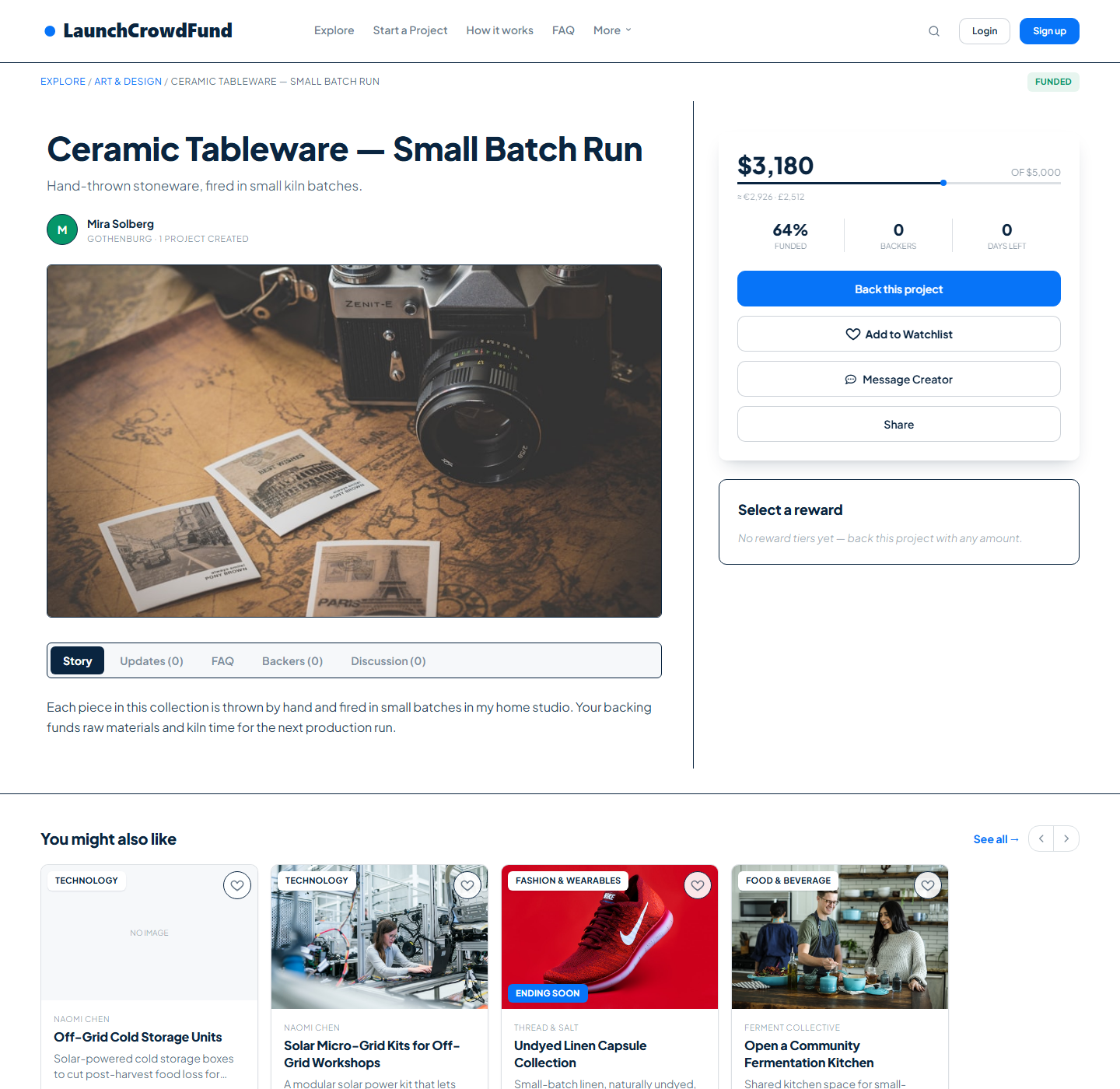
A reward campaign with tiers, funding progress and backer count.
A reward campaign with tiers, funding progress and backer count.Real screen, captured from our live demo
01

How reward crowdfunding works here

Creators build a campaign through a seven-step wizard, set a funding goal and a deadline, and publish reward tiers at whatever price points they choose. Backers pledge against a tier, their card is authorised via Stripe SetupIntent, and the charge is only captured when the campaign actually funds. If it does not fund, nothing is taken.

02

All-or-nothing and flexible funding

Both models ship. All-or-nothing holds the authorisation and only charges on success, which is the Kickstarter model. Flexible funding charges as pledges come in and lets the creator keep whatever they raise. The model is set per campaign, so one platform can host both.

03

Reward tiers, limits and delivery dates

Each tier carries its own price, description, quantity limit and estimated delivery date. Claimed quantities are tracked, so a limited tier closes itself once it sells out, and backers see what is left before they pledge.

04

Your fee, your revenue

You set the platform fee percentage your creators pay. It is collected as a Stripe Connect application fee at the moment of the charge, and it lands in your account. We take nothing from it, now or later.

See it running before you decide.

A live install with real campaigns, or the full pricing breakdown — whichever you need first.

Explore the live demo See pricing
Trademark notice. Kickstarter is a registered trademark of Kickstarter, PBC, and GoFundMe is a registered trademark of GoFundMe, Inc. LaunchCrowdFund is an independent product and is not affiliated with, endorsed by or sponsored by either company. Their names are used only to describe the kind of platform this software can power.